
“I believe life is a series of near misses. A lot of what we ascribe to luck is not luck at all. It’s seizing the day and accepting responsibility for your future.” — Howard Schutz
A chemical incident in Southern California unfolded over the 2026 Memorial Day Weekend that captured the attention of every major news outlet. It didn’t cause any deaths or injuries, but it generated a lot of anger. Despite the short attention span of the public, we’re probably going to see consequences for years to come.
What Happened?
On Thursday, May 21, 2026, personnel at the GKN Aerospace facility in Garden Grove, California notified the Orange County Fire Authority (OCFA) that one of their methyl methacrylate (MMA) storage tanks containing about 7,000 gallons of the monomer was overheating. Normally stored at 50°F (10 C) –the flash point of MMA—the temperature in the tank was 77°F (25 C). The safety systems activated: a relief valve lifted to vent the pressure, and sprinkler systems automatically began spraying water to cool the tank.
The OCFA determined that people in the vicinity needed to evacuate. Officials later reported that a failure of the tank cooling system led to the overheating. In absence of system cooling, the OCFA began applying fire water to the tank surface to cool the tank and its contents.
Despite the external cooling, the tank continued to heat. On Friday and Saturday, May 22 and 23, officials increased the evacuation zone several times, ultimately requiring 50,000 residents to evacuate. By Sunday, May 24, the temperature in the tank had exceeded 100°F (38 C), the upper limit of the temperature gauge.
As the temperature of the tank contents increased, so did the vapor pressure of the MMA. On Saturday, May 22, a crew assessing the integrity of the tank discovered a crack. It is still not clear whether the higher vapor pressure in the tank caused the crack, or simply exacerbated an existing crack, but in any case, the OCFA was convinced that the crack contributed to relieving the pressure in the tank, which in turn helped to lower the tank pressure.
By Monday, Monday 25, the temperature in the tank was down to 93°F (34 C). The OFCA determined that the risk of a catastrophic tank “BLEVE” had been “eliminated” and area monitoring showed that MMA vapor levels in the atmosphere were “normal”.
No one was injured or killed in the incident, but 50,000 people were forced to evacuate for one or two days. GKN is facing several class-action lawsuits as a result of the incident, and the Orange County District Attorney’s Office has launched a criminal investigation into the incident.
There is a much more thorough accounting of the incident in the Wikipedia article, Garden Grove chemical leak, as well as reporting from all of the major news services.
Methyl Methacrylate
MMA is a monomer that exothermically reacts with itself to make poly(methyl methacrylate), generally known as an acrylic. Rohm and Haas originally introduced it to market as “Plexiglas”. That it reacts with itself to form a polymer is what makes it valuable. That the reaction is exothermic means that when an uncontrolled reaction gets underway, it heats up and reacts even faster. At some point, the reaction can become a runaway.
There are several measures that can be applied to keep the reaction from starting in the tanks that store the monomer. Commonly, manufacturers introduce phenolic inhibitors like MEHQ (monomethyl ether of hydroquinone, aka 4-methoxyphenol) or HQ (hydroquinone), usually at 10 to 100 ppm levels. They require the presence of oxygen to be active. The challenge for users, then, is to ensure that there is oxygen to keep the inhibitor active during storage, without a creating a flammable mixture in the headspace of the storage tank.
Another measure is keeping the MMA cool. The cooler the MMA, the less reactive it is.
If things do get out of control, there is an approach called “short-stopping”, where a compound like phenothiazine kills the reaction, although many users are reluctant to install a short-stop system with an automatic feed, for fear that it will go off spuriously.
There are several properties that influence the safety of MMA:
Boiling point: 214°F (101 C)
Vapor pressure: 29 mmHg (0.56 psi) at 68°F (20 C)
120 mmHg (2.3 psi) at 100°F (38 C)
Flash point: 50°F (10 C)
Lower explosive limit: 1.7%
Upper explosive limit: 8.2%
Permissible exposure limit: 100 ppm
Immediately Dangerous to Life and Health: 1000 ppm
Given that a BLEVE (a boiling liquid expanding vapor explosion) can only occur when a liquid is held at a temperature above its boiling point (so that the boiling liquid suddenly expands as it vaporizes, resulting in an explosion), the OFCA’s concerns about a BLEVE were probably misplaced. However, an atmospheric tank failure was a legitimate concern, as it could have resulted in a vapor cloud well above the 1000 ppm IDLH (120 mmHg is equivalent to 158,000 ppm) or a vapor cloud explosion.
Close to 50,000 Residents
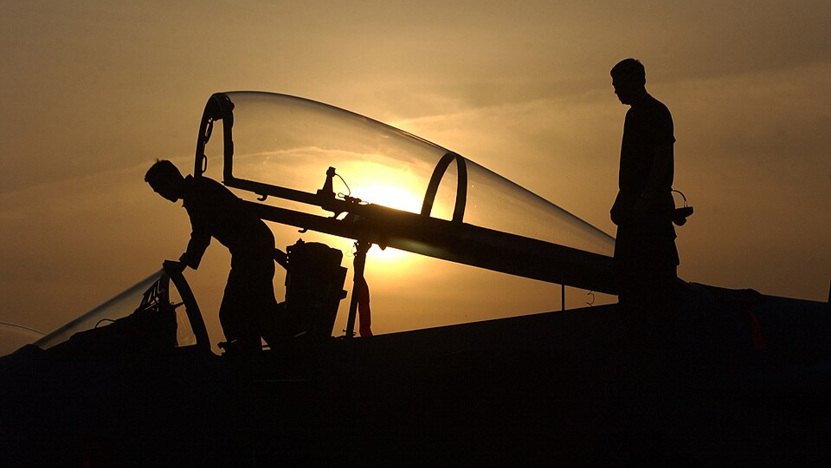
The Garden Grove facility is part of GKN’s Transparency Systems division and produces aircraft canopies, cockpit windows, and passenger aircraft windows. GKN began operating the facility in 2003, when it acquired the plant from Pilkington Aerospace. Pilkington Aerospace operated the facility, also producing acrylic aircraft canopies, cockpit windows, and passenger windows. Pilkington acquired the facility from Swedlow Inc. in 1986. David Swedlow opened the facility in 1963, when he built the facility to produce acrylic aerospace components.
Methyl methacrylate has been at that site for over 60 years. As is often the case with industrial facilities, the surrounding property developed after they got there. Fifty thousand residents now living near a plant in Southern California that is only 35 miles from downtown Los Angeles should come as no surprise.
Harsh Judgments Are Coming
That the plant was there before the neighbors is of no comfort to GKN Aerospace. The lawsuits are real. The criminal investigation is real. They are the result of having neighbors, even if the neighbors came after the plant.
It is not as though the plant had ignored the hazard. They had equipped the MMA storage tank with a pressure relief valve and installed external spray systems to provide emergency cooling. When the tank began overheating, they notified the emergency responders.
After the fact, in hindsight, GKN is going to be judged harshly. This, despite the fact that executing their emergency plans prevented any loss of life, any injuries, or any property damage to the neighbors or to the rest of the facility.
It’s Time to Take Another Look
Methyl methacrylate and other acrylic monomers are widely used to produce acrylic resins which we use as a substitute for glass, for acrylic paints, for adhesives, and for textiles. In other words, the stuff of modern life. All of them, methyl methacrylate and other acrylic monomers, have the hazards to which the world was introduced by the incident in California.
For those of us using acrylic monomers, it may be time to take another look at the safeguards we have a place, our relationship with our emergency responders, and changes that have occurred in our vicinity since we first built our plant.
