
“That’s what insurance is for, right?” — Liam Dai (and thousands of others)
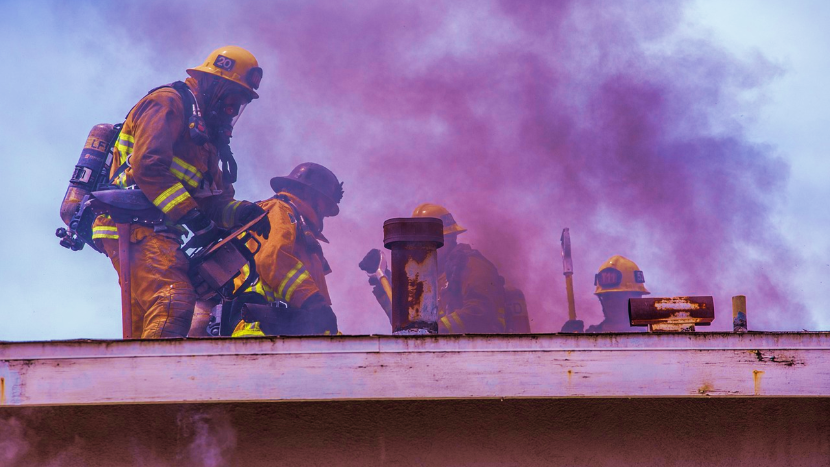
There was recently a fire at a popular business in south Saint Louis city that was widely reported on the local news. As with many fires that happen here in Saint Louis, someone set up a GoFundMe fund to help the business owner cover the expenses not covered by insurance and to get back on their feet.
In the continuing follow-up coverage of the incident, news outlets reported that the cause of the fire was probably an electrical box failure after hours. Electrical box fire? Isn’t there more to it than that?
This recent publicity reminded me of something that a plant manager in Japan told me while I was there working on a project.
The Attitude About Structural Fires in Japan
The project was at a plant operated by the Japanese subsidiary of an American company. The plant manager was American, but had a habit of comparing American culture to Japanese culture quite unfavorably. One day, the subject of structural fires came up. The plant manager told me that they did not have nearly as many structural fires in Japan as in the U.S.
“Well, isn’t that because there are far more structures in the U.S.”
No, even accounting for the number of structures, he insisted that the rate of structure fire in Japan was not as high.
“It’s because the Japanese don’t tolerate structural fires. If someone’s home burns down, there is no sympathy. Instead, there is anger and shaming. How could someone be so careless as to expose their neighbors to the risk of a spreading fire.
“You people in the U.S. (yes, he said, “You people”) are far too forgiving, far too willing to accept fires as a normal thing.”
He had my attention. But was it true?
A Comparison of Residential Fires
In 2024, there were 329,500 residential structure fires in the United States. At the same time the Federal Reserve Bank said there were 149.4 million total housing units in the U.S. That works out to 2.21 fires per 1,000 American homes per year.
The same year, there were slightly less than 21 thousand structural fires in Japan. About half were fires in residential structures; the other half are commercial, industrial, or institutional. Altogether, there were 65 million total residential housing units in Japan. That works out to 0.161 fires per 1,000 Japanese homes per year. In other words, the Japanese suffer residential fires at a rate 14 times less than Americans do.
Non-residential Fires
So, the plant manager was right. Home fires are significantly less likely in Japan than in the U.S. What about non-residential fires. Is it possible that while Americans are more careless about fires in their homes than the Japanese, that American businesses and institutions are more concerned about fires in their buildings?
According to the National Fire Protection Association (NFPA), there were 470,500 structure fires in the U.S. in 2024. Subtracting the 329,500 residential structure fires, that means that in 2024 there were 141,000 non-residential structure fires in the U.S. Altogether, there are about 6.5 million non-residential buildings in the U.S. That works out to 2.17 fires per 1,000 American non-residential structures.
About the same as with homes.
Industrial Fires
As process safety professionals, however, we are not as concerned with residential, commercial, or institutional fires as we are with industrial fires.
Turning back to another article by the NFPA, we find that during the period of 2017 through 2021, there were an average of 8,077 structure fires at manufacturing, processing, and industrial facilities. There are about 350,000 industrial buildings in the U.S.
That works out to 23 fires per 1,000 American industrial structure. That is over ten times the rate of residential fires or commercial structure fires in the U.S.
Accepting Fires as Normal
If the plant manager in Japan was reasoning correctly, we have a higher rate of structural fires in the U.S. than they do in Japan because we are too willing to accept structural fires as normal. What does it say about our acceptance of industrial structure fires, which occur at ten times the rate of residential and commercial structure fires?
Beware of a Reckless Attitude
It would be easy to conclude that industrial fires occur so frequently because we don’t care. Or at least, that we don’t care enough. Unfortunately, it becomes easy to let fire hazards accumulate, not out of indifference, but by normalization of deviance.
Instead, we must remain vigilant about controlling ignition sources (which includes hot work permitting programs, electrical maintenance, and grounding and bounding), managing flammable and combustible materials (good housekeeping, especially for combustible dusts, proper storage, and appropriate waste disposal), and installing and maintaining adequate fire suppression equipment.
Immediately, though, we need to ensure that emergency plans are in place and that personnel are trained to respond. We don’t have to let a reckless attitude cost us our own workplace.

Leave A Comment